

Usually, when we talk about leading with humanity, we’re referring to how we as leaders treat others. We rarely ask what decades of toughening up have done to our own.
In recent years, the rise of AI has been fuelling debate about the value of a more ‘human’ approach to leadership. Much of this stems from fears about the consequences of AI for the workforce and concerns about the implications for leadership. We hear about ‘human-centred’ leadership, ‘conscious’ leadership and – in the case of my own work – Deeply Human® leadership. In most cases the approach in question focuses on the wellbeing of those we lead. And for good reason, as they are the ones whose wellbeing is usually being compromised and those required to do the work. Far rarer is any focus on our own humanity as leaders.
The Hamster Wheel paradigm
Despite the arguments of the so-called ‘New Optimists’ that we are living higher quality lives than ever before, there is ample evidence of the harmful impact that modern life and work is having on us all. We are often held hostage by overwhelming busyness, by the pace and volume at which we are required to operate, the isolation and lack of connection we experience, and the anxiety generated in us by war, climate change, the cost of living and the threat to jobs – and possibly humanity – by AI.
These symptoms are manifested in organisations of all kinds in the prevalence of what I call The Hamster Wheel paradigm. This is characterised by the frenzied spin of endless tasks, the disconnection from meaningful activity and the relentless demands made of the workforce, all of which can turn purposeful, creative work into a formulaic, tail-chasing slog that lacks fulfilment or value.
The consequence for our organisations is a dilution of performance and organisational impact, high staff sickness, attrition and burnout.
Leaders are just as affected as those we lead. In fact, arguably we face the additional challenge of finding ways to squeeze more out of an already drained workforce, often with less in the mission-led sector where I do most of my work.
The choice we face is seemingly to toughen up and survive or to feel the impact and burnout. Whichever choice we make, the effect is cumulative over time and highly problematic – albeit with a different face. The brutal face of burnout is more frequently written about. The equally brutal face of toughening up is somewhat less so. This is where I want to focus your attention.
When resilience becomes armour
By the time we reach positions of leadership – particularly the more senior ones – we have usually been in organisational life for some time, often decades. We have had our fair share of setbacks and triumphs during that time and have been challenged on multiple occasions to make and execute decisions we may have found personally confronting. We have engaged in innumerable difficult conversations, initiated multiple performance management processes, dismissed people and executed change in strategy, form and structure, all of which have inevitably had unwelcome consequences for some of those we have led.
It is likely that we struggled more with these things the first time round than we do now. In fact, we have probably become a bit desensitised to the harsher edges of organisational life, more armoured, better protected, more thick-skinned. Resilience is a word we often find in leadership discourse. It usually refers to the response I’m talking about: getting tough, bouncing back more quickly, maybe even becoming a bit numb to some of the stress, better able to take less of it home with us.
But is that really a good thing? What does that mean for our capacity to notice, to feel and to be sensitive to what is happening for the people we lead? How has living amid the relentless Hamster Wheel affected our ability to slow down enough to be in connection with others, even when we don’t need anything from them, and to connect with them on a human level? How have our patterns of living and working at pace for decades affected our ability to slow down long enough to notice how we really are deep down and who we are becoming, never mind the smaller details of the world around us and the people in it, both within and outside the walls of the office?
In essence, how have the conditions in which we have lived and worked for so long, as well as our desire to do well and make a difference, caused us to lose some connection with the depth of our own humanity?
The poor leadership behaviours that don’t make the headlines
We read about the most extreme consequences of modern working patterns in the headline reports of terrible wrongdoing by leaders and toxic organisational cultures. There are too many to list here, sadly, but Harrods, Meta and the UK Post Office stand out to me.
However, there are more everyday leadership behaviours that don’t make the headlines that still prove damaging over time. I’m talking about the ways in which we overlook the struggle and stress in teams in our haste to get onto the next thing. I’m talking about the choices we make about the conversations to engage in or to cut short and how much of ourselves we decide to show or to hide from those we expect to follow us. I’m referring to the amount of effort we make to create pathways to meaningful work for people, that either leave our teams in or help lift them out of the slog. And I’m talking about the investment we choose to make in understanding ourselves better and the impact we have on others, whether intentionally or unintentionally, the work we put into building our team’s trust and the time we take to demonstrate care for them, even when it’s not convenient given other priorities and deadlines.
The Deeply Human® leadership model
These behaviours are all examples of the five foundational elements of Deeply Human® leadership: Clarity of Purpose, Connection, Consciousness, Creativity and Care.
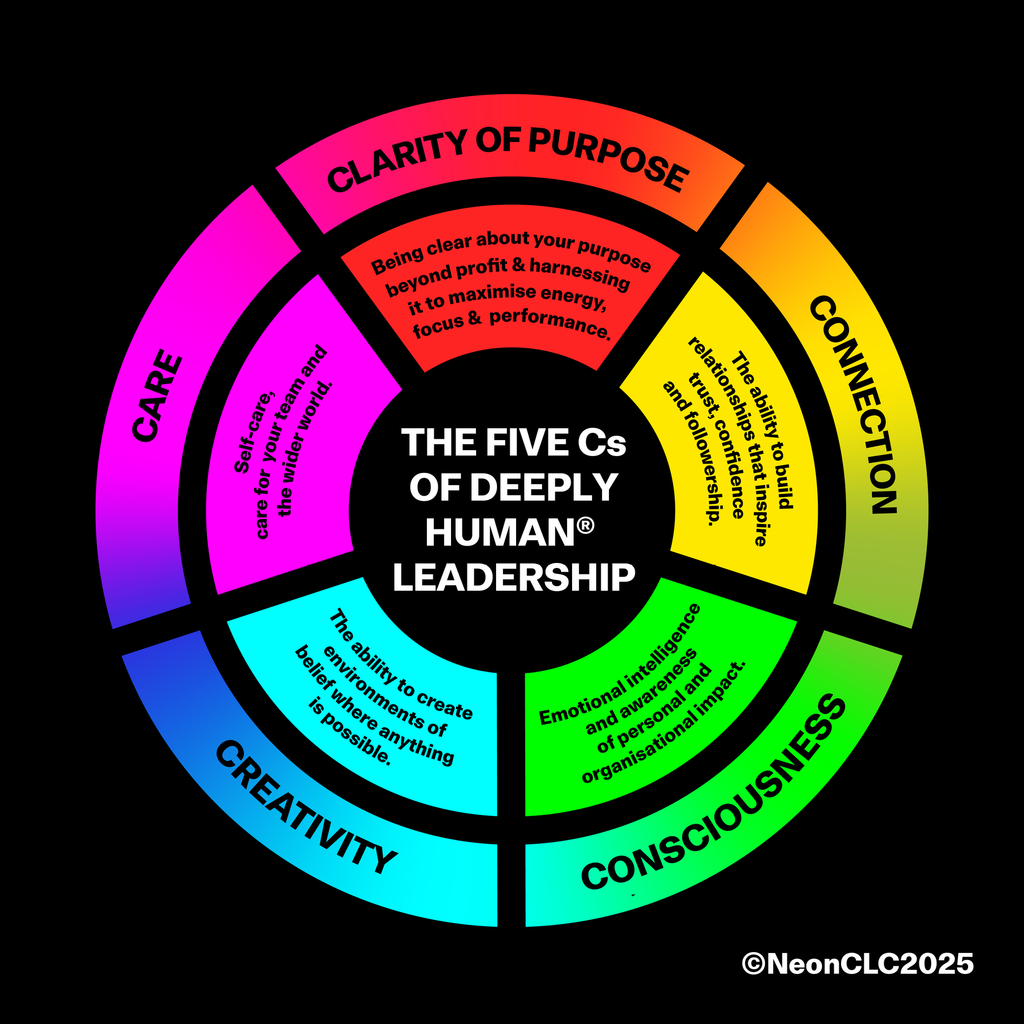
Each element of the model is made up of practical ways of leading that are only made possible by the connection we as leaders have to our own humanity, which makes up the very soil of leadership. Our humanity is innate, not learned. Every single one of us has it, we are born with it, but the environments in which we live and work can cause us to lose connection with it unless we pay very careful attention. It is this soil which we must nurture and feed through the practices that really nourish the deepest parts of who we are.
The hallmarks of humanity
This means paying attention to the five hallmarks of humanity. I call them ARISE:
| Aliveness | the capacity to notice and be alive to the world around you; |
| Relational presence | the capacity to be in connection with others, with compassion and without agenda; |
| Inner world | the capacity to be in touch with the full range of human emotion; |
| Soul | the capacity to live at depth, not surface-level; and |
| Embodiment | the capacity to inhabit your body, not just your mind, and to heed its messages and its wisdom. |
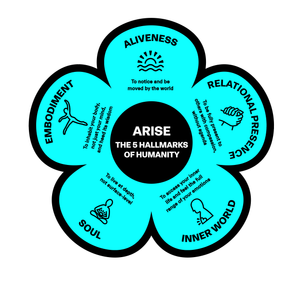
This is where the true art of leading with humanity starts. It is not easy to retain a strong connection with our humanity in the face of the onslaught of modern life and work. But that is one of today’s greatest leadership challenges. Our humanity is our most precious resource and should be at the forefront of how we choose to live, lead and work. We neglect it at our peril. It is only by investing in this connection inside ourselves that we can be trusted to lead well, to ignite workforce energy and unleash the organisational impact we all so wish to achieve.
About the Author

Kate Jones is a leadership adviser, leadership development practitioner, speaker and author of an upcoming book on how leading with humanity is the key to unlocking organisational impact. She is the founder and director of Neon, a company that specialises in helping mission-led organisations develop Deeply Human® leaders.
What type of leader are you?
If you’d like to explore this further, you can take Neon’s leadership quiz to assess your approach across humanity.