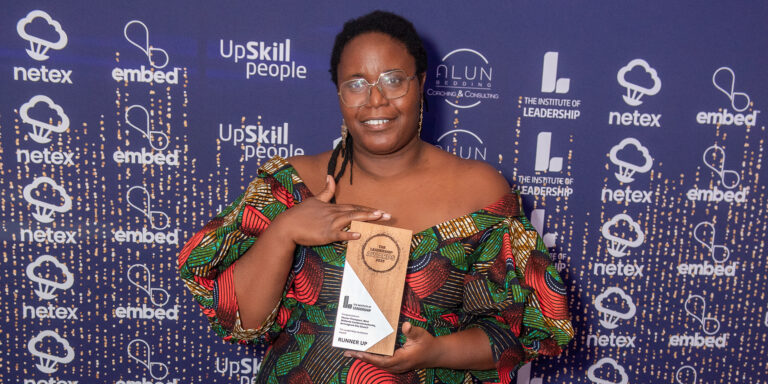

How do you feel to be recognised with the runner-up prize for the Institute Book of the Year Award?
It was a huge surprise and a real honour. My book is about belonging and empathy, values that are becoming rarer in the world in which we live, so this recognition feels like a signal that these values still matter to leaders and workplaces. It also felt like recognition of my long-term work to build bridges between Israelis and Palestinians [for example, Gal has worked with NGOs that facilitate meetings to help develop friendships between former adversaries, and also help integrate Arab citizens of Israel into the workforce, aiming to eliminate discrimination and inequality]. That work has setbacks and moments of hopelessness, yet I believe every conflict has an expiration date, and people need to keep preparing for the day after. In that sense, the prize also honours those who keep the flame lit despite the storms outside.
What led to you writing The Belonging Paradox?
I have always struggled to belong. Belonging often came with a price that I was not always willing to pay, such as compromising my values or being loyal to a group whose values I could not identify with fully. At the same time, there was nothing I wanted more. Over the years, I realised this was not only my story. Everyone I met had times of being inside or outside a group, sometimes by exclusion and sometimes by choice. I came to see this tension between wanting to be together and wanting to remain myself as a fundamental human paradox that shapes families, teams, organisations and societies. It sits beneath many of the conflicts I know, from personal relationships to organisational and even international divides.
Did anything surprise you during the writing process?
At the start, I was sure the book would focus on balancing uniqueness and belonging. As I wrote, I saw how hard it has become to belong to groups beyond our immediate tribe, and sometimes even within it. The deeper reason, I realised, was the erosion of empathy. That insight shifted the book. It became equally about the belonging paradox and the global empathy crisis that makes healthy belonging so difficult.
What is one common misperception of your work?
That empathy in leadership is soft or ‘fluffy’, and that vulnerability signals weakness. Many still believe leaders must appear strong, certain and always in control. I see the opposite. Real leadership is sensitive, empathic, connective and willing to admit mistakes. That human honesty is what builds trust and psychological safety, and it is what allows people to belong in a healthy way.
If you could offer a piece of advice to your 18-year-old self, what would it be?
Don’t be so harsh on yourself. Stop living as if you constantly need to prove your worth. Don’t chase other people’s expectations. Trust that you are good as you are. Love yourself, and live life to its fullest.
How do you switch off from work?
I am an open-water swimmer, and I love swimming in the sea. It is sport and meditation in one. I feel deeply connected to nature and to the underwater world, the fish, turtles and corals. On the days I swim, I return calmer, more focused and more energised.