
I have spent more than 20 years helping people understand stress, and if there is one thing I have learned, it is this: nobody warns you how lonely leadership can feel. You are expected to have the answers. To stay calm when everything around you is not. To carry your own pressures quietly while making space for everyone else’s. I have sat in that seat. I still sit in it – and I know how heavy it gets when nobody thinks to ask how you are doing, because they assume that is your job to ask, not theirs.
Not another list of things leaders are getting wrong. Something closer to the truth of what this role actually asks of us, and what I have learned – often the hard way – about doing it with more humanity.
“The strength people actually respect is not the appearance of having it all together; it is the willingness to be real”
The weight nobody sees
Leadership looks composed from the outside. Inside, it rarely feels that way. You are managing competing priorities, absorbing other people’s stress alongside your own, and trying to make good decisions while running on very little reserve. I know what it is to walk into a room and perform calm I did not feel, because the team needed it and I did not think I had permission to need anything myself.
That tension, between being strong and being honest, is one of the hardest parts of leading people. Nobody tells you that the strength people actually respect is not the appearance of having it all together; it is the willingness to be real.
What I have learned about listening
For a long time, I thought good leadership meant having the answer ready. If someone came to me with a problem, my instinct was to solve it, quickly, so we could move on. It took me a while to understand that people do not always want a solution. Sometimes they want to be heard, properly, without being rushed towards a fix.
I have learned to ask better questions. “How are things feeling for you at the moment?” opens something that “are you OK?” rarely does. But I have also learned that the question only matters if what follows it does too. I have caught myself, more than once, asking how someone was doing and then glancing at the clock, half listening, already moving on to the next thing. That is not a failure unique to other leaders. It is one I recognise in myself.
Mixed messages
I have told people to protect their evenings while myself answering emails at midnight and encouraged a team to slow down while visibly not slowing down at all. I am not saying this to confess it as a leader’s crime. I am saying it because I think most of us who lead have done some version of it, and pretending otherwise does not help anyone.
Culture is not built by what we say in a meeting. It is built by what people watch us do afterwards. When I have been honest about my own limits, or admitted when I got a conversation wrong, I have watched something shift in a room. People do not need a perfect leader. They need one who is willing to be human in front of them.
Leaders need support too
This is the part I want to say plainly, because I think it gets lost. Leaders need support. Not just training, not just tools, but genuine space to reflect, to be honest about what they are carrying and to hear that they are not failing simply because they are struggling.
I have watched capable, caring leaders push themselves past what was sustainable because they believed asking for help would look like weakness. That belief costs people far more than it protects them. If we want leaders who can hold space for their teams, we have to build a culture that holds space for the leaders, too.
“The more I have allowed myself to be seen as a person, rather than a role, the more honestly my team has spoken to me in return”
Small things, done consistently
None of what I am describing requires a large budget or a new programme. It requires consistency. Checking in after a hard meeting. Thanking someone for telling you the truth. Admitting when you got the tone wrong. Actually taking the break you tell others to take. Trust is built in these small, repeated moments, not in grand gestures – and it works both ways. The more I have allowed myself to be seen as a person, rather than a role, the more honestly my team has spoken to me in return.
Where this leaves us
I do not believe leadership is about appearing to have everything under control. Instead, I believe it is about being present, being willing to listen properly, and being honest enough to say when we have got something wrong. Leaders deserve the same compassion we ask them to extend to everyone else.
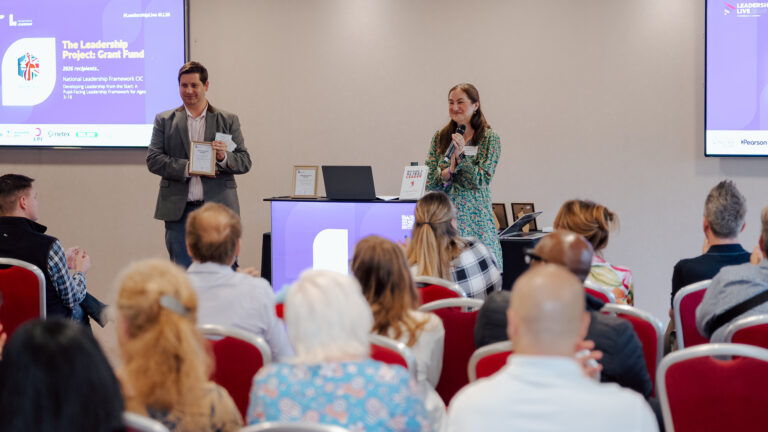
That is what I spoke about at this year’s Leadership Live – not a checklist of leadership failures, but a conversation, leader to leader, about what this actually feels like, and how we might carry it a little better, together.
Neil Shah is the founder of The Stress Management Society and chief insights officer at International Wellbeing Insights. For more than 20 years, he has worked with individuals, leaders and organisations around the world to better understand stress, improve wellbeing and build healthier workplace cultures. He is an international speaker, author and recognised expert in stress management and human behaviour, known for bringing warmth, honesty and lived experience to conversations about what leadership really asks of us.
This article is also available in the autumn 2026 issue of Edge magazine