
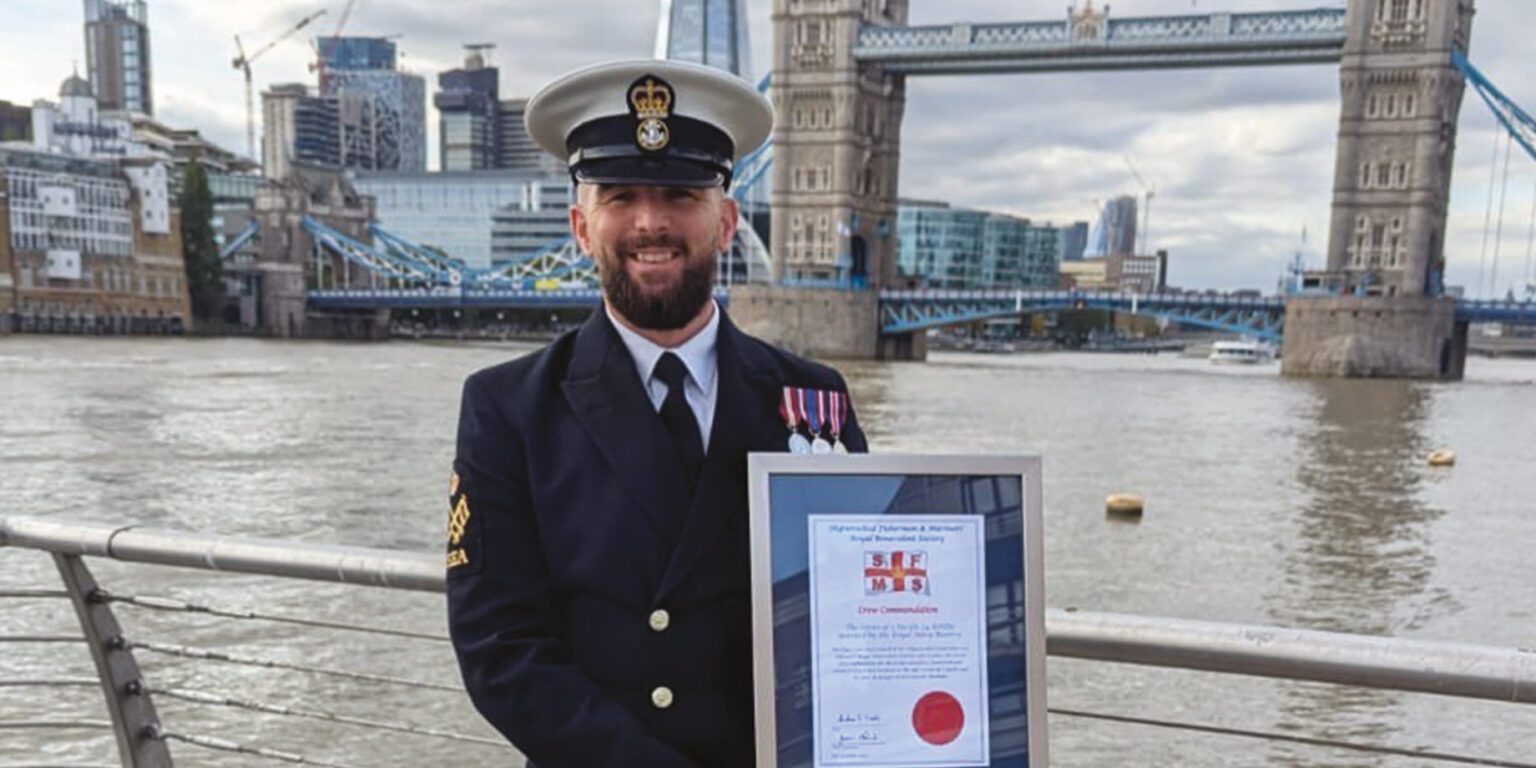
“I would not be where I am today if it wasn’t for the navy. I would not be as confident; I would not be so open to embracing new things; I would not be as resilient. It offers a different perspective on life – and the doors it can open are just incredible.”
Ryan Scott is a senior non-commissioned officer at the Leadership Institute of the Royal Navy (LIRN). When we speak, it is his first day back after leave and he is slightly jetlagged still, but nothing can dim his enthusiasm for a career in the navy.
He is especially passionate about the LEadership ADvocate (LEAD) Network, a new initiative to help the LIRN develop a modern leadership model for the navy.
“When General Sir Gwyn Jenkins was appointed as the new First Sea Lord [highest ranking officer and professional head of the navy] last year, he set a 100-day challenge for different areas of the navy,” Scott says.
“Our challenge was to deliver a new leadership model – changing how we assess and promote people, how we equip leaders with the skills and support needed to foster high-performing teams, and how we define leadership excellence and develop leaders at all levels, regardless of where they sit in the organisation. This work is designed to ensure our leaders are assessed, developed and supported effectively to meet the demands of war-fighting excellence.”
“Part of what we are trying to do is ensure we bring leadership best practice into the navy from other areas of defence and the civilian sector”
Following extensive research and feedback gathering by the LIRN, the LEAD Network was set up.
“It is a coalition of people from across all ranks and areas of the navy, both military and civilian, who are forging what leadership is going to look like in the future,” Scott explains. “Essentially, what we are trying to do is provide internal, external and tri-service leadership growth for people through offering new connections, opportunities and experiences.
“The tri-service aspect of it is really important, especially for our junior members, to give them that exposure to other branches of the armed forces and to support them in their leadership journey right from the very beginning.”
So far, the LEAD Network has sent people on courses at the army’s Non-Commissioned Officer Academy. It has also created places on its advanced leadership apprenticeship course for Royal Air Force personnel. Future opportunities include leadership roundtables with senior leaders, including the Second Sea Lord.
“It’s been really powerful because we are sharing knowledge about how leadership works in the army, RAF and navy, and learning from each other,” Scott says. “Part of what we are trying to do is ensure we bring leadership best practice into the navy from other areas of defence and the civilian sector.”
“Our LEAD Network members are heavily involved in helping us shape this awards offer”
Rewards and learning
There has been really high interest in the LEAD Network – 150 advocates have joined since it was launched in November. The network also held the First Sea Lord’s Leadership Symposium in May.
“One of the biggest bits of feedback we gathered was that junior people can feel disconnected from the most senior officers,” says Scott. “At the symposium, we had junior cohorts and the head of the navy in the same room, discussing the challenges and opportunities for emerging leaders. It was a really inspiring day about psychological safety and empowerment, looking at building teams for war fighting in the future.
“We also launched our first Leadership Awards at the symposium. These celebrate high-performing individuals and reinforce the Royal Navy’s commitment to our leadership culture and behaviour.”
The symposium and Leadership Awards are not the only things that have been created. In November, LEAD Network members were invited to nominate five people from different disciplines in the navy to attend the IoL Leadership Awards, in recognition of their leadership performance.
“Part of my role is to improve how we reward and recognise talent, so offering people a place at the IoL Awards celebrations was a really amazing opportunity to be able to do this,” says Scott.
The LEAD Network has also established a relationship with Women Empowering Defence (WED) – an organisation committed to increasing the participation and advancement of women in leadership in defence and security.
At a recent WED event about nurturing emerging talent, the LEAD Network was invited to send 10 people along, helping to share knowledge and build networks.
Retention challenges
So, why the need for such an initiative? Part of the reason is to increase recruitment and improve retention: the Ministry of Defence has said it is facing a “workforce crisis”1 as a result of continuing recruitment and retention issues. The LEAD Network can help the Royal Navy by driving a modern, people-focused leadership culture through visible advocacy, continuous development, and stronger connection between the Leadership Institute and the whole force.
Also, says Scott, “although the navy is good at assessing and assuring units and platforms – be it a ship, a submarine, an air station or a Royal Marine unit – from a culture point, it can miss the personal story. There is a need to understand in detail the challenges individuals face, the support they need to stay in the navy and what would help them step up to a leadership role.”
Scott understands this well, because he had a brief time away from the navy. After enlisting straight from school, he enjoyed a seven-year stint, which he describes as “brilliant”, but, by 2015, he says he was exhausted and wanted to do something completely different.
He decided to try life in the civilian world, getting a job in the motor trade. At first, he quite enjoyed it – being at home, having every weekend off – but he found corporate culture stifling. “Managers were not as engaged with staff as they are in the navy. If you wanted to make changes, there were more hoops to jump through.”
After six months, he realised this life was not for him. “The realisation was like falling off a cliff – I just really missed the navy. But I was unsure what I missed. Being at sea? The sense of pride in wearing the uniform? The people and the camaraderie? I wanted time to consider my options, as I wasn’t sure if I would be jumping back in too soon. I thought I’d join the Royal Naval Reserve (RNR) and see if that would scratch the itch.”
“The LEAD Network can help the Royal Navy by driving a modern, people-focused leadership culture through visible advocacy, continuous development, and stronger connection between the Leadership Institute and the whole force”
Opening doors
Scott loved it – in fact, the more he did with the reserves, the more he wanted to do. In 2017, he got a full-time role with the RNR, but he noticed that there was no opportunity for reservists to spend time at sea. He thought this was mad, so spoke to his captain about creating a sea-time training programme for reservists, giving them two weeks’ experience onboard a ship.
“This programme has now become mandatory,” he explains. “We’ve sent nearly 300 reservists to train at sea around the world. It’s been great for three reasons: to help bridge the gap between the reserve force and regular force; provide people who are better operationally prepared for deployment; and inspire people to join up.”
Scott discovered one of his key passions is providing people with opportunities, and he moved to become leading seaman in the Greater London South East Area Engagement Team. “We were essentially an outreach team who spoke to young people in schools, colleges and community groups about life in the navy. It was phenomenal.
“I haven’t got many academic qualifications, so my career and leadership journey has been about the opportunities – meeting people, trying different things, new experiences – all of which the navy has given me. It was really empowering to share with young people what the navy has given to me and what it could offer them. We changed lives when we spoke to them, no doubt about it.”
“The dream is for the LIRN to be a North Star for leadership”
New horizons
Scott has ambitions to be a warrant officer in a couple of years – he says he will be young in this rank, but is always keen to break the mould and try something different. He also has big ambitions for the LEAD Network.
“The dream is for the LIRN to be a North Star for leadership,” he says. “In two years’ time, I would like the LEAD Network to have a sustained portfolio of opportunities for its people and to have evolved to be delivering good leaders back to the navy. I want it to become essential to any chain of command – where people come for a leadership support network, where they can learn and develop. That’s where I have my sights set.”
What makes a successful leader in the navy
Scott says: “People assume leadership in the navy means being able to give orders, be at the front of the team and be in control all the time, especially when the pressure is on.
“Those skills are important, but not everyone has them at the start – people need the chance to grow and achieve them.
“To be a leader in the navy at any level, you need to have emotional intelligence and empathy. The rigour behind leadership is understanding your individuals.
“The captain on the ship when I was in the reserves was a phenomenal leader. He took the time to understand his people – who they were, where they are from, how they got there and what their skill set is – and how to get the best out of them. For me, he embodied what ‘good leadership’ looks like – he led effortlessly because he took time to invest in his people individually.”
This article was first published in the Spring 2026 issue of Edge. You can read it here